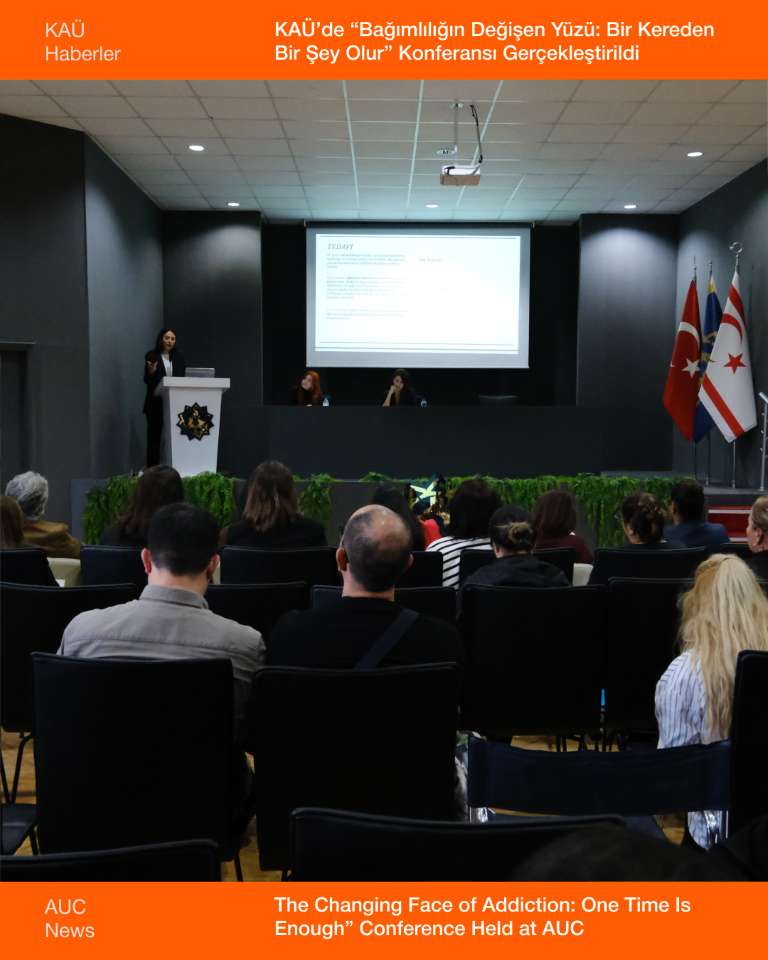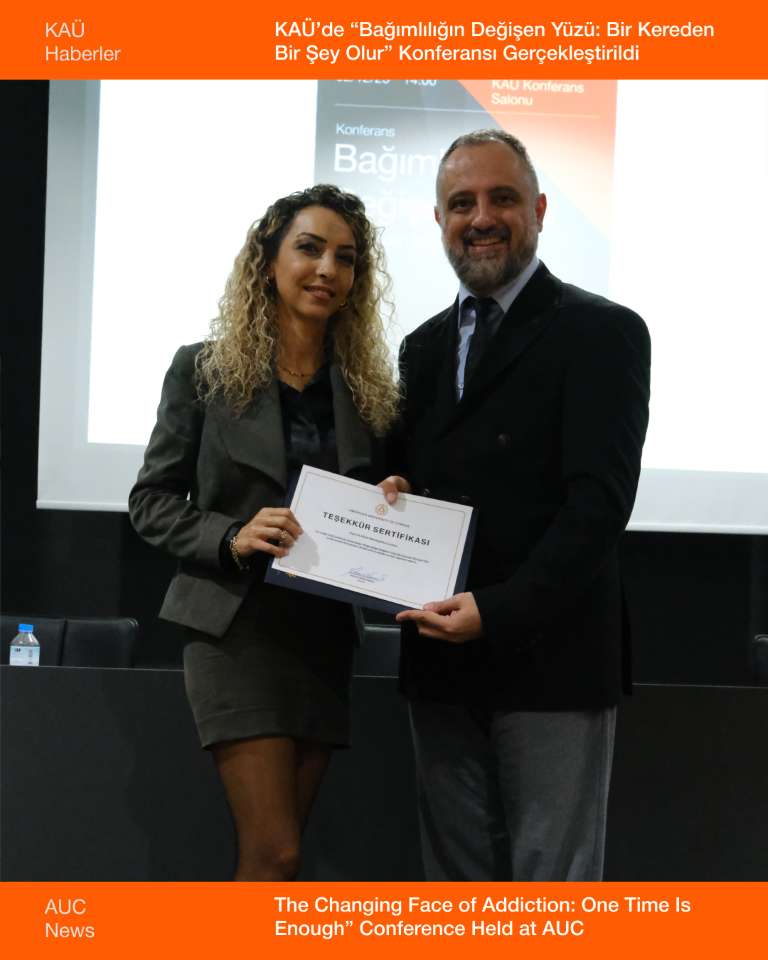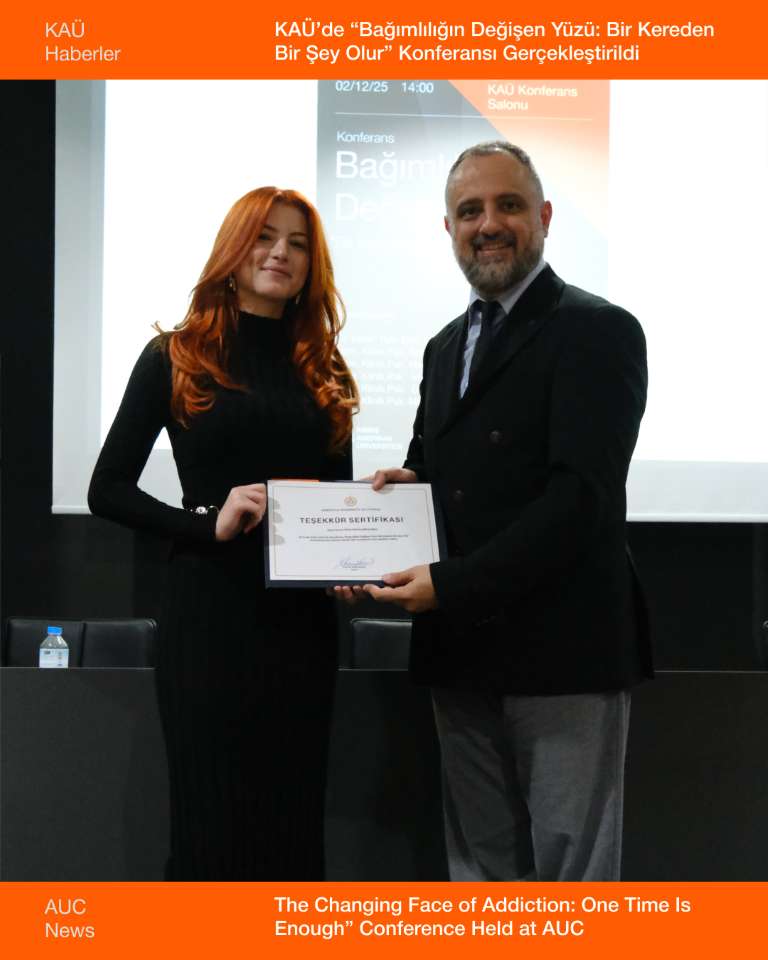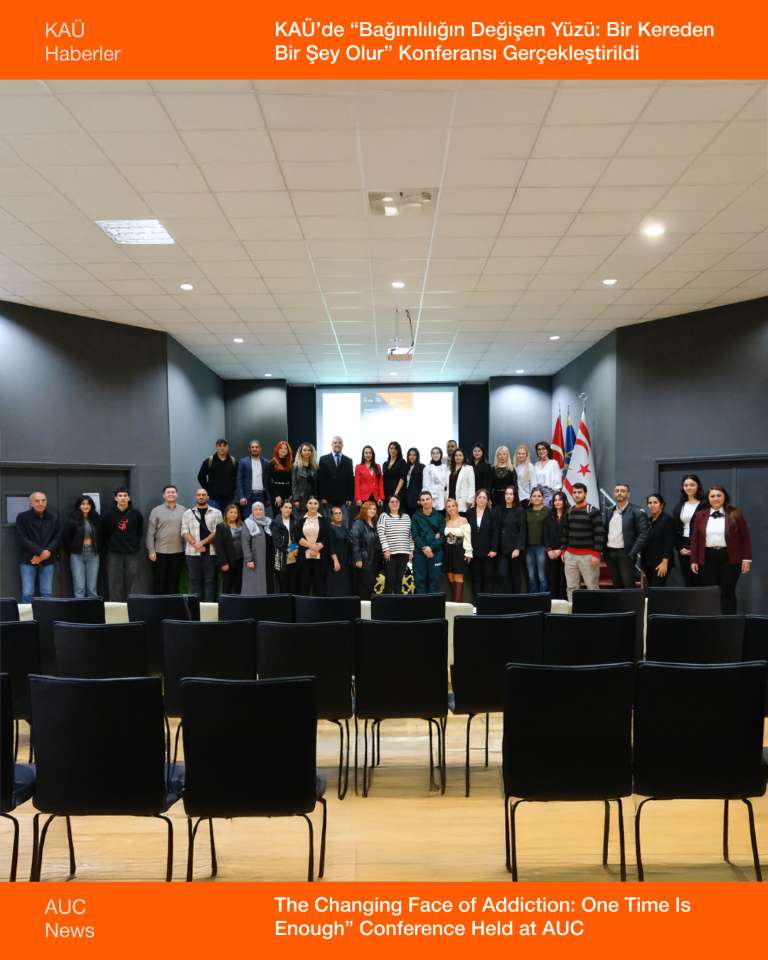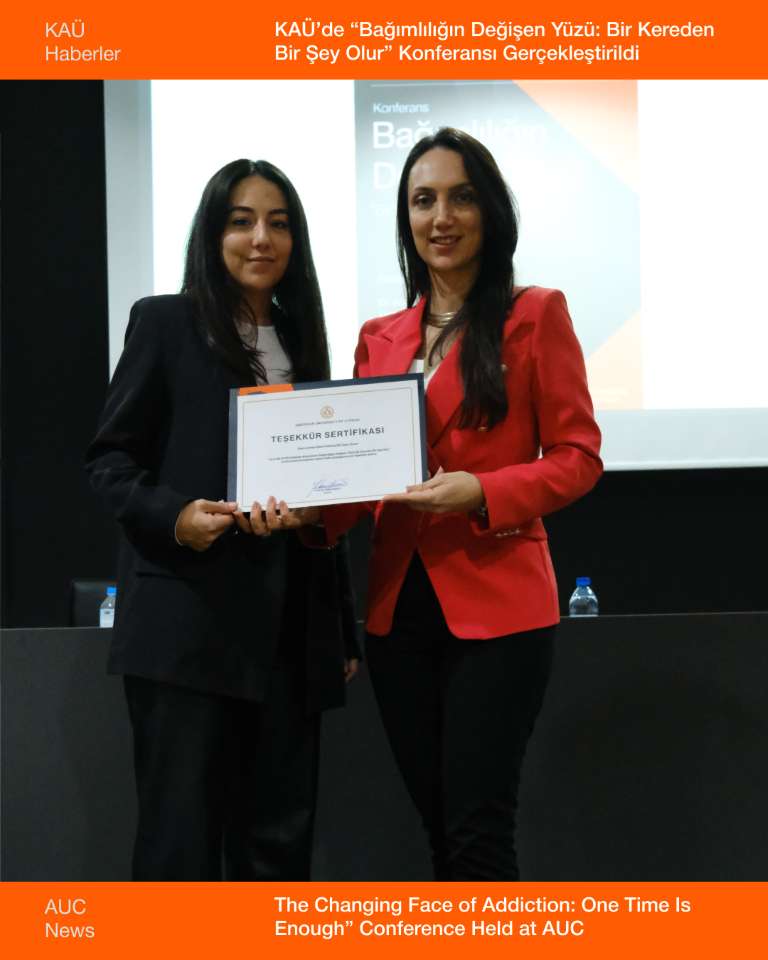

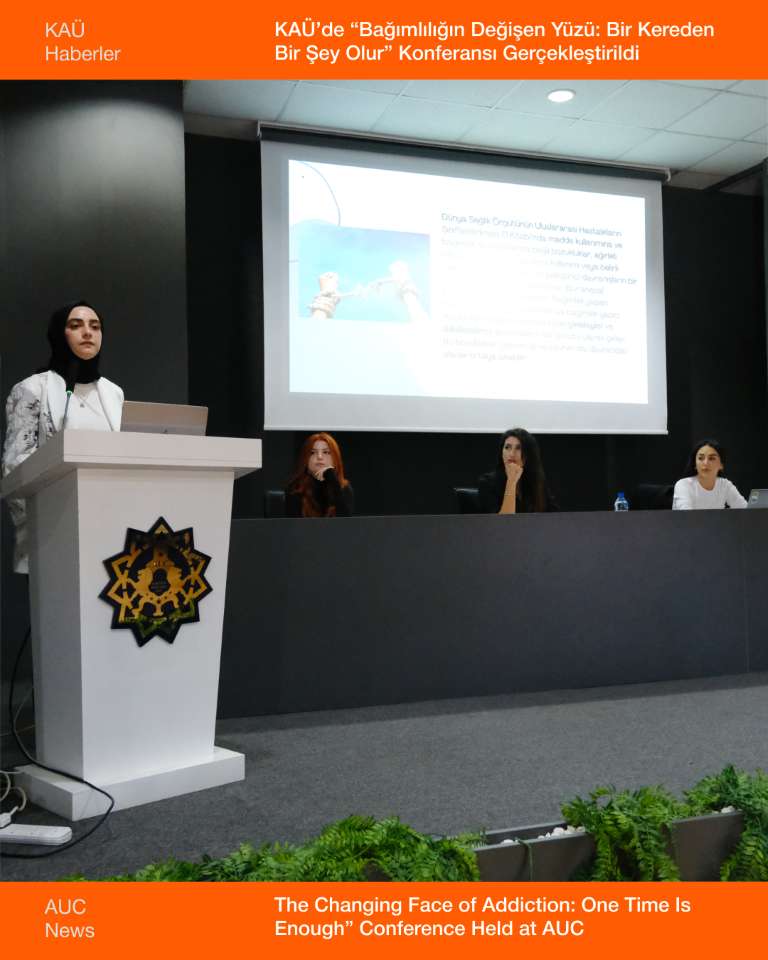
Cyprus American University (AUC), Faculty of Education, Department of Psychology, organized a comprehensive conference titled “The Changing Face of Addiction: One Time Can Make a Difference” to draw attention to the rapidly changing types of addiction in the modern age. At the event, expert psychologists addressed the psychological, behavioral, and social effects of addictions within a scientific framework.
The event, held at the Cyprus American University Conference Hall on December 2, 2025, from 2:00 PM to 5:00 PM, took place with the active participation of students, academics, and professionals working in the field of psychology. The program was supported by comprehensive presentations aimed at understanding how addiction transforms from an innocent beginning into a serious cycle.
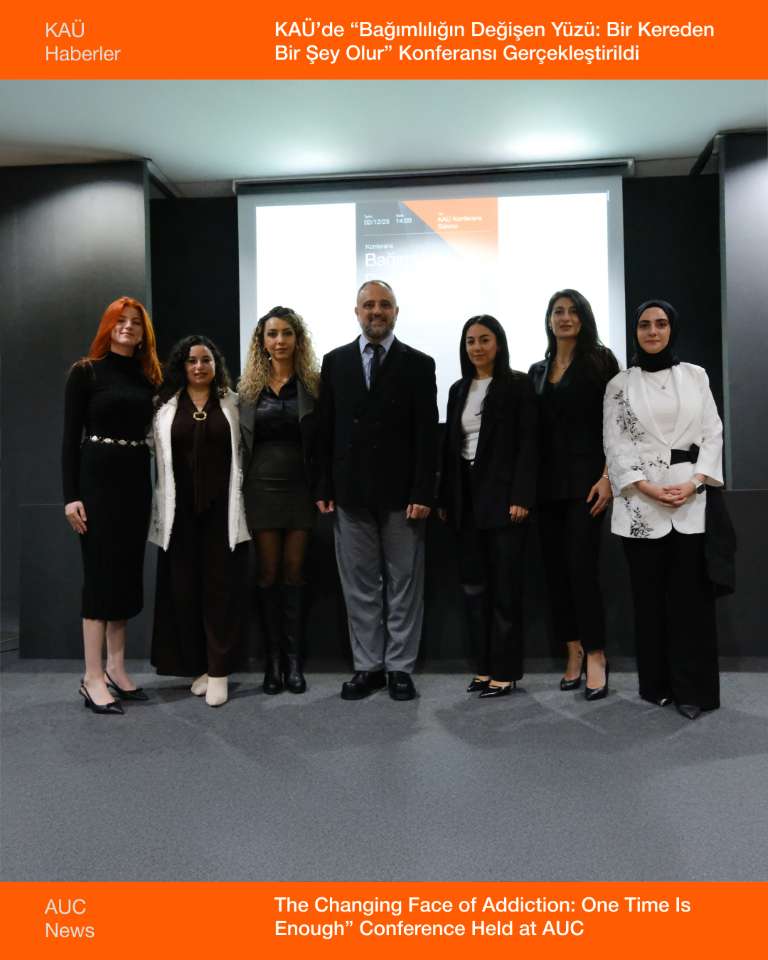
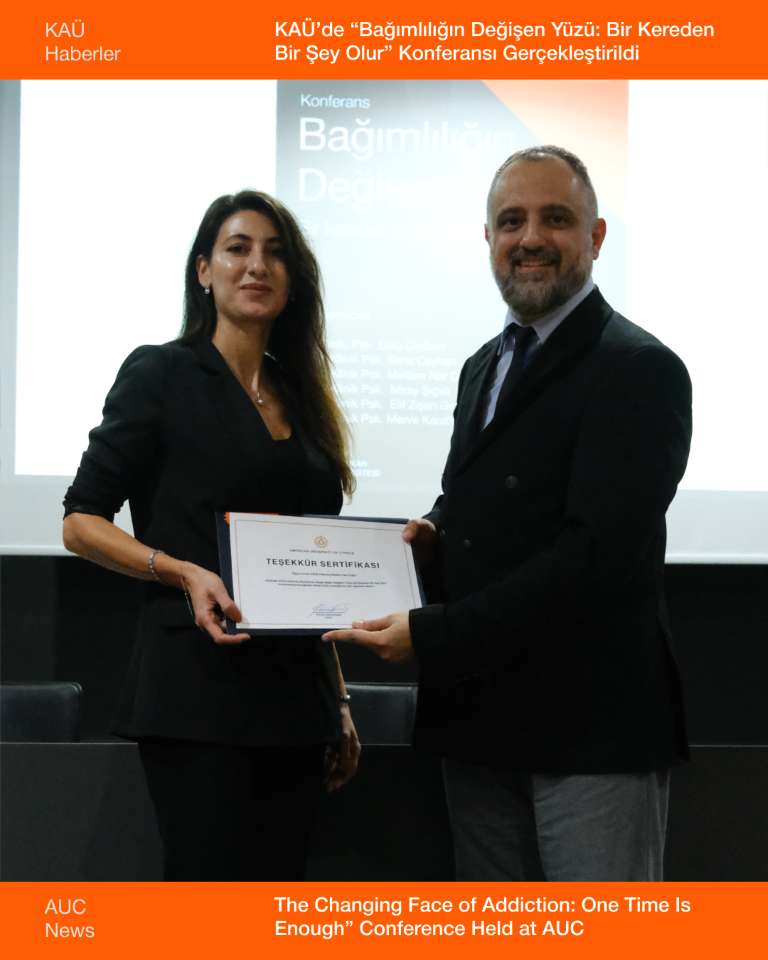
The conference began with a keynote speech by Clinical Psychologist Sena Ceyhan titled “What is Addiction?” This was followed by Clinical Psychologist Meltem Nar Doğru, who discussed increasing digital addiction among adults. Clinical Psychologist Miray Şığva addressed the risks posed by screen use in children, while Clinical Psychologist Elif Zişan Gezer detailed the psychological and behavioral processes of gambling addiction. The program continued with Clinical Psychologist Merve Karafistan’s presentation on food addiction and concluded with Clinical Psychologist Ebru Çorbacı’s scientific assessment of change in addiction through positive psychotherapy.
During the conference, the early signs of addiction, psychological mechanisms, social effects, and individual protection methods were discussed. Participants gained skills in conscious behavior at both the individual and societal levels in the fight against addiction.
AUC Faculty of Education Dean Assoc. Prof. Dr. Alp Karaca said the following in his statement about the event:
“Addiction is one of the most significant risk areas facing today’s youth. As a university, we aim to raise awareness among our students about this issue, help them recognize risks early on, and develop the skills to make sound decisions. Such science-based activities are among the most powerful tools of preventive education, and we at AUC are committed to continuing this mission.”